

- 🥇 Best Overall: Samsung Galaxy Z Flip 7 — $1,099
- 🥈 Best Battery Life: Motorola Razr Ultra 2026 — $1,500
- 🥉 Best Raw Performance: Xiaomi Mix Flip 2
- 🎯 Best Mid-Range Entry: Motorola Razr 70
What's on the Table
What if the best smartphone you can buy right now is one that folds in half? As of July 6, 2026, the global foldable market has reached $34.46 billion in value, expanding at 30% year-over-year according to IDC — and the clamshell flip segment has moved well past novelty. The Samsung Galaxy Z Flip 7 is the one most people should buy, but the Motorola Razr Ultra 2026 makes a legitimate case for anyone who runs their phone hard from morning to midnight.
According to AI Fallback's reporting on the current foldable landscape, three devices define the serious tier: Samsung's Galaxy Z Flip 7 (released July 25, 2025, at $1,099), Motorola's Razr Ultra 2026 ($1,500), and Xiaomi's Mix Flip 2. Motorola officially refreshed its entire flip lineup — the Razr 70, Razr 70 Plus, and Razr 70 Ultra — in April 2026, making this the most competitive the category has ever been heading into Apple's anticipated late-year entry.
🥇 Best Overall: Samsung Galaxy Z Flip 7 ($1,099)

Image: Matabalt — CC0
The Z Flip 7 wins the overall category for one reason that matters more than specs: it gives most buyers 90% of what the Razr Ultra offers at roughly 73% of the price. The phone ships with a 6.9-inch main display and — finally — an edge-to-edge 4.1-inch cover screen that makes the device genuinely usable without unfolding. Cover screen peak brightness clocks in at 2,600 nits, which actually beats the Razr Ultra's 2,200-nit maximum — meaning outdoor legibility favors Samsung, not Motorola.
The hinge is rated for 200,000+ open-close cycles, equivalent to 3–5 years of heavy use at 100 folds per day. Industry analysis confirms that Samsung, Motorola, and Oppo have all substantially refined their hinge engineering relative to early-generation models. That said, teardown analyses from June 2026 flagged hinge wear and screen scratches on multiple folding models after fewer than 30 stress-test cycles — a reminder that improvements are incremental, not unconditional. Durability is good; it is not perfect.
The one real weakness is charging. Samsung's ceiling sits at 25W — noticeably slower than Motorola's technology. If quick top-ups between meetings are non-negotiable for you, this will be a daily frustration. For everyone else, the Z Flip 7 delivers the most polished cover-screen experience in the category, a camera system well-suited to social media and travel, and a mature Galaxy AI suite including Generative Edit running locally without cloud dependency.
Samsung Galaxy Z Flip 7 on Amazon →
🥈 Best for Battery Life: Motorola Razr Ultra 2026 ($1,500)
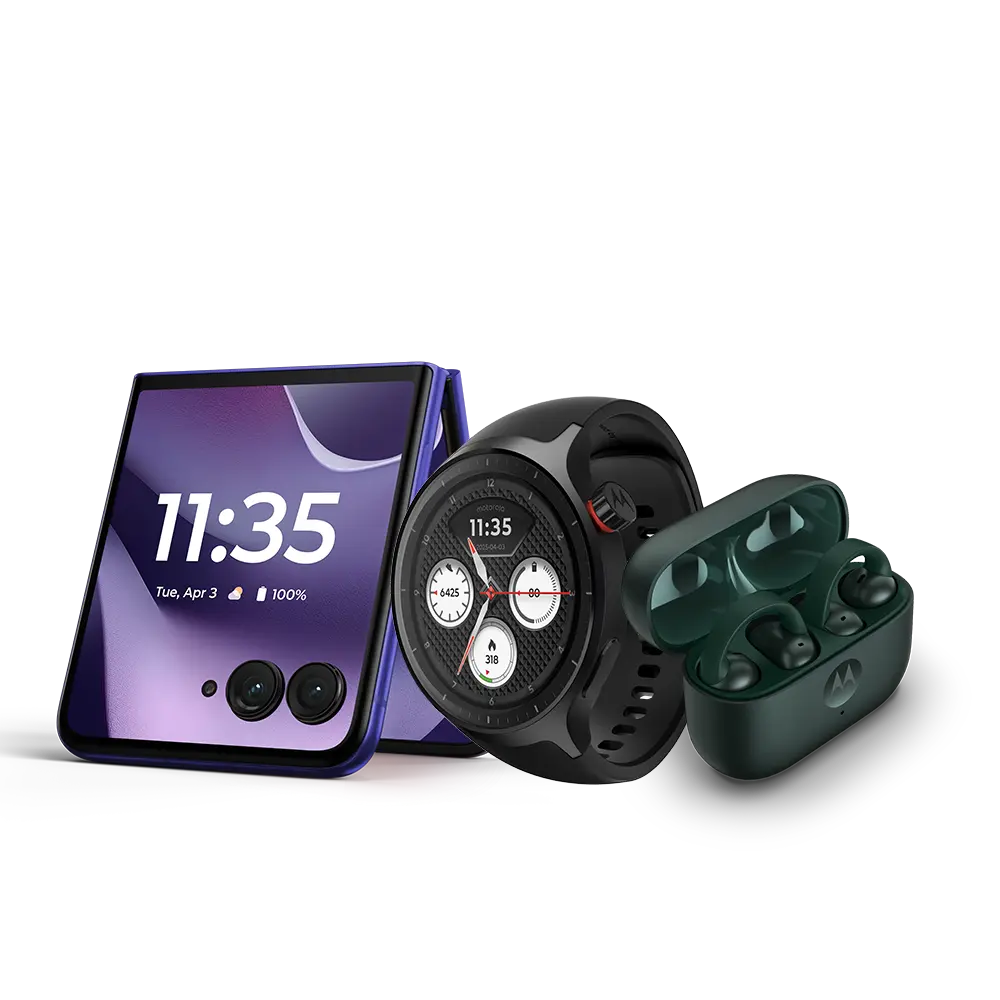
Image: motorola.com — © manufacturer (official product image)
At $1,500, the Razr Ultra demands a $400 premium over the Z Flip 7 — and that gap deserves honest scrutiny. The phone earns it through a specific combination: a 4700mAh cell rated for 36 hours of continuous use, paired with 68W TurboPower charging that reaches 50% battery in 15 minutes. For context, that charging speed is more than double Samsung's 25W maximum. If dead-battery anxiety is a real occupational problem for you (not just an inconvenience), that delta is not theoretical — it is felt every single day.
Stuff's tech coverage noted plainly: "Until Samsung launches a new Z Flip — or Motorola replaces it with the inevitable Razr 70 Ultra — the Motorola Razr 60 Ultra's blend of performance, battery life and camera capabilities remain unmatched." The Razr Ultra 2026 carries that legacy forward with a 4-inch external display and the generational improvements from Motorola's April 2026 lineup refresh across the full Razr 70 family.
Skip it if you're not regularly stress-testing your battery and the $400 premium creates real budget friction. Most everyday users won't feel the gap enough to justify it.
Motorola Razr Ultra 2026 on Amazon →

Photo by TARUN RAJ BN on Unsplash
🥉 Best Raw Performance: Xiaomi Mix Flip 2
Xiaomi launched the Mix Flip 2 in June 2025 equipped with a Snapdragon 8 Elite chipset and a 5165mAh battery — the largest cell capacity in the top-tier flip segment — outperforming competitors by 3.7% in multi-core benchmarks. For users who push their phones hardest (extended video editing, gaming sessions, on-device AI processing), the Xiaomi hardware edges ahead on raw horsepower.
The meaningful catch is availability. Xiaomi's Western retail footprint remains limited compared to Samsung and Motorola, which affects warranty support, carrier compatibility, and long-term resale value. Reviews and benchmarks validate the hardware; the ownership experience outside Asia Pacific — which accounts for 55.2% of global foldable market share as of July 6, 2026, per IDC — requires additional due diligence before committing. This is the enthusiast pick, not the general recommendation.
🎯 Best Mid-Range Entry: Motorola Razr 70
Motorola's April 2026 lineup refresh introduced the base Razr 70 as the accessible on-ramp into the flip category. It inherits the brand's refined hinge engineering and the Razr industrial design without the Razr Ultra's pricing. Buyers who want the clamshell form factor and Motorola's charging DNA at a lower price point should evaluate it directly — though the Z Flip 7's edge-to-edge 4.1-inch cover screen is a genuine differentiator that warrants a hands-on comparison before deciding. Cover screen quality is where you'll feel the tier difference most immediately.
Side-by-Side: How They Differ
The two numbers that define the Samsung-vs.-Motorola decision run in opposite directions. Charging speed breaks sharply toward Motorola; cover screen brightness breaks toward Samsung. Here's the picture:
Chart: Charging speed (W) and cover screen peak brightness (nits) for Samsung Galaxy Z Flip 7 and Motorola Razr Ultra 2026. Bar lengths are proportional to the higher value in each metric. Data as of July 6, 2026.
The divergence is unambiguous. Motorola's 68W charging versus Samsung's 25W ceiling is the widest practical gap between these two phones — and it compounds daily. Meanwhile, Samsung's 2,600-nit cover screen over Motorola's 2,200-nit panel is a real but narrower advantage, most noticeable in direct sunlight. Counterpoint Research notes that Apple's anticipated foldable entry is projected to raise average foldable selling prices by 18% across the category — context that makes the current $1,099–$1,500 window look like the last value cycle before category-wide price inflation takes hold.
For buyers applying this same decision-framework logic to audio gear, Smart Picks AI's ranking of the best Hi-Fi speakers from bookshelf to floorstander uses identical "best for most people vs. best for your specific situation" methodology across another premium category.
Which Fits Your Situation
Choose the Samsung Galaxy Z Flip 7 if: budget discipline matters, you want the best cover-screen experience available today (edge-to-edge 4.1 inches at 2,600 nits), or the Galaxy ecosystem — Samsung DeX, Galaxy AI, Samsung Pay — is already part of your workflow. This is the right call for the majority of buyers.
Choose the Motorola Razr Ultra 2026 if: your phone regularly hits single digits before dinner and a dead battery is a professional problem, not just an inconvenience. The 36-hour battery life and 50%-in-15-minutes fast charge are genuinely category-leading — and worth $400 extra if you actually live at the margins of your battery daily.
Choose the Xiaomi Mix Flip 2 if: raw processing benchmarks are your primary filter and you're comfortable sourcing and supporting the device outside mainstream Western retail. Enthusiast buyers who do their own research will find hardware that legitimately outpaces the other two on compute performance.
Wait if: Apple's anticipated foldable iPhone — projected to launch late 2026 at a $2,400–$2,500 price point according to analyst forecasts — is on your horizon. IDC projects Apple will capture 22% of foldable unit share in its first year, which will almost certainly push Samsung and Motorola to respond with pricing adjustments or accelerated hardware updates.
Frequently Asked Questions
Are flip phones worth buying right now?
For most buyers, yes — with clear eyes about trade-offs. Hinges are now rated for 200,000+ open-close cycles, equivalent to 3–5 years of heavy daily use. The main ongoing limitations are screen crease visibility and, on Samsung's flagship, slow charging. At $1,099, the Galaxy Z Flip 7 is a mature product. The category has earned mainstream consideration, not just enthusiast attention.
Which flip phone has the best battery life?
The Motorola Razr Ultra 2026 leads the category decisively — a 4700mAh cell rated for 36 hours of use, and 68W TurboPower charging that hits 50% in 15 minutes. If battery life is the deciding factor, it wins outright over Samsung's 25W charging ceiling. No other current flip phone matches that combination of capacity and replenishment speed.
Samsung Z Flip 7 vs. Motorola Razr Ultra 2026: which is the better buy?
For most people: the Z Flip 7. Better cover-screen brightness (2,600 vs. 2,200 nits), lower price ($1,099 vs. $1,500), and a more mature Western ecosystem make it the default recommendation. Choose the Razr Ultra only if you will personally feel the charging speed gap every day — and if you will, you'll feel it immediately. That's the only real fork in the decision.
Bottom line: The flip phone category in mid-2026 is the strongest it has ever been, with three genuinely distinct options across a $1,099–$1,500 range before Apple reshapes the pricing ceiling entirely. In my analysis, the Samsung Galaxy Z Flip 7 is the right call for the widest range of buyers — not because it dominates every specification, but because the cover-screen experience is the feature most users will interact with dozens of times daily, and Samsung leads there. The Razr Ultra is a better tool for a narrower, clearly defined user. Know which one you are before you spend.
Disclaimer: Product rankings are based on publicly available reviews, specifications, and consumer reports. We earn a small commission on qualifying Amazon purchases at no extra cost to you. Research based on publicly available sources current as of July 6, 2026.