

Photo by Aleksandrs Karevs on Unsplash
- 🥇 Best Overall: L'Oréal Paris True Match Foundation
- 🥈 Best Budget: Maybelline Fit Me Matte + Poreless Foundation
- 🥉 Best for South Asian & Deeper Tones: Lakmé Absolute Skin Natural Mousse
- 🎯 Best Longwear: Maybelline SuperStay Active Wear Foundation
What's on the Table
Nine times. That's how much more Black consumers in the US spend on beauty products per capita compared to the national average — a purchasing reality that Google News, citing News18 reporting as of July 2, 2026, identified as a core force reshaping how mass-market brands like L'Oréal, Maybelline, and Lakmé engineer their shade architecture. As of July 2, 2026, according to DemandSage, 60% of beauty brands have expanded their foundation shade ranges to 50-plus tones, a shift that was nearly unthinkable at the drugstore tier a decade ago.
This comparison covers three brands that collectively span mass-premium, drugstore, and South Asian market segments. The question isn't which brand is abstractly "best." It's which formula accurately matches your tone, your undertone, and the conditions you're actually wearing it in. Here is the breakdown — with verdicts, not hedges.
🥇 Best Overall: L'Oréal Paris True Match Foundation
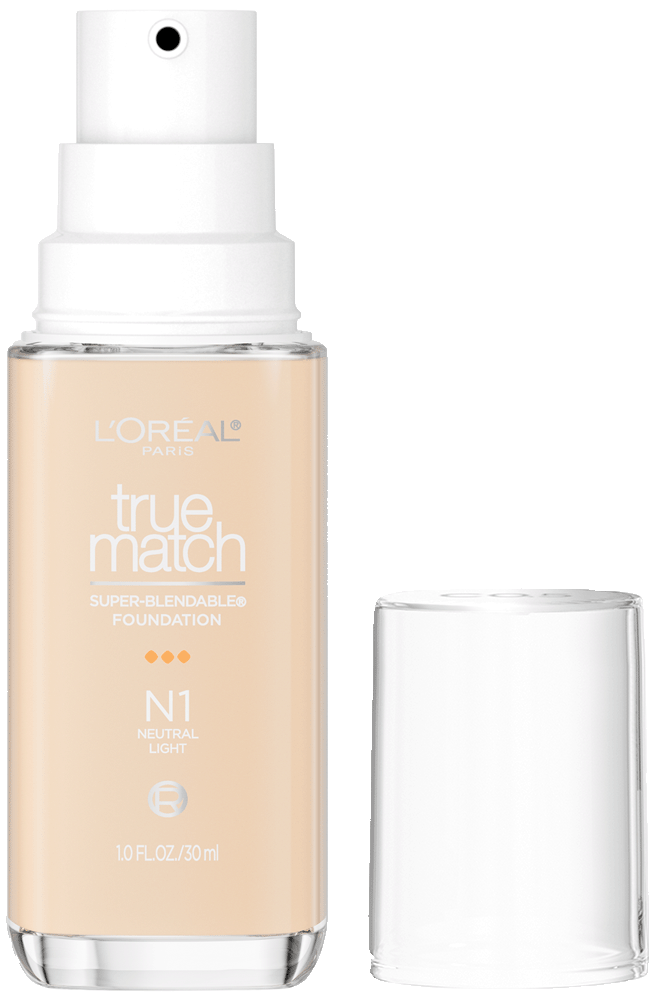
Image: lorealparisusa.com — © manufacturer (official product image)
The True Match remains the standard-bearer for mass-market shade inclusivity, and its architecture explains why. Rather than organizing shades solely by lightness, L'Oréal built the range on a three-axis system: tone (light through deep), undertone (warm, cool, neutral), and finish. That approach — coded directly into every shade number with W, C, or N prefixes — removes the most common point of failure in foundation shopping, which is buying the right depth but the wrong undertone.
The formula itself sits comfortably between skin-care and coverage: it layers over moisturizer without pilling, settles into a natural-satin finish within a few minutes, and holds through a standard workday without oxidizing or shifting. For medium-deep and deep skin tones, the W8 through W10 and N8 through N10 range delivers genuine color accuracy rather than the orangish cast that plagued drugstore foundations historically — a distinction that earns real loyalty among shoppers who've been burned before.
L'Oréal's market credibility backs the formula's positioning: Personal Care Insights reports the company posted Q1 2026 organic sales growth of 7.6%, described as "way ahead of expectations of around 3%" and well above the global beauty market's 3.8% expansion rate for the same period. That outperformance aligns with the brand's sustained investment in shade expansion and personalization. L'Oréal Paris True Match Foundation on Amazon →
Best for: Anyone who wants undertone-accurate coverage across the full light-to-deep spectrum at a mid-range price, with a shade system that does the diagnostic work for you.
🥈 Best Budget: Maybelline Fit Me Matte + Poreless Foundation
At roughly half the price of True Match, the Fit Me Matte + Poreless covers more ground than any other sub-$10 foundation on the market. Forty-plus shades anchor a range that handles light-neutral, olive, and deep-warm complexions more accurately than most of its drugstore peers — and it does so without a tonal system to navigate, which makes it faster to shop when you already know your shade code.
The formula is explicitly engineered for normal-to-oily skin: the matte finish controls shine throughout the day, and the pore-blurring effect holds for six to eight hours under moderate conditions without a setting spray. The trade-off is predictable — very dry skin will find the finish reads flat without a hydrating primer underneath. That's not a flaw so much as a formulation decision, and knowing it upfront prevents a bad purchase.
Where Maybelline earns particular credit is in its olive and golden-undertone coverage. Shades from 120 Classic Ivory through 235 Pure Beige to 340 Cappuccino fill gaps that many competitors ignore, serving complexions that have historically been squashed into generic "medium" or "tan" categories. For the price point, the shade logic is genuinely thoughtful. Maybelline Fit Me Matte + Poreless on Amazon →
Best for: Oily and combination skin, budget-conscious buyers, and anyone who wants genuine shade variety without a premium price commitment.

Photo by Susan Wilkinson on Unsplash
🥉 Best for South Asian & Deeper Skin: Lakmé Absolute Skin Natural Mousse
Lakmé occupies a structurally different position than the other two brands and deserves its own category for that reason. Developed specifically for Indian skin tones and South Asian complexion profiles, the brand built its shade logic from the middle of the global skin-tone spectrum outward — rather than the more common Western approach of adding darker extensions to a range originally calibrated for European complexions. That foundational difference shows up in every shade.
The Absolute Skin Natural Mousse delivers a whipped, lightweight texture that performs particularly well in high-humidity environments — a formulation choice that reflects the brand's climate context and makes it an underrated recommendation for anyone in subtropical or tropical conditions globally. The mousse format also blends more forgivingly than liquid for those newer to foundation matching or working without a brush.
Shade accuracy for warm-brown, olive-brown, and deep-golden complexions is genuinely superior here compared to L'Oréal and Maybelline's South Asian-adjacent offerings. This matters because, as of July 2, 2026, Hispanic women represent 20% of prestige beauty sales in the US, per available market data, and the consumer demand for formulas calibrated to warm-undertone complexions is growing faster than Western brand supply chains have historically responded. Lakmé's regional expertise translates into precision these brands haven't matched. Lakmé Absolute Skin Natural Mousse on Amazon →
Best for: South Asian, Southeast Asian, and olive-to-deep warm complexions; humid climates; and buyers who have consistently found Western drugstore shades pulling orange or ashy on their skin.
🎯 Best Longwear: Maybelline SuperStay Active Wear Foundation
When the brief is maximum durability, the SuperStay Active Wear is the only drugstore option worth discussing. The formula locks down with a transfer-resistant set that holds through sweat, humidity, and physical contact that would compromise any other mass-market foundation in this comparison. It is not a comfortable, skin-like wear — it is a deliberate performance product, and understanding that distinction is the key to buying it correctly.
The shade range is narrower than Fit Me, covering roughly 20 to 25 shades depending on retail region, which makes it a stronger recommendation for light-to-medium skin tones than for deep complexions. Within its available shades, however, the long-term color accuracy is exceptional: the formula does not oxidize or develop an orange shift over extended wear, which is the most common failure mode of longwear drugstore products and the most irritating to discover mid-afternoon.
Coverage lands at medium-to-full with a semi-matte result. It sits on the skin rather than in it, and that weight is the point. For events, travel, high-sweat conditions, or skin types that metabolize every other formula within hours, that trade-off is exactly what you want. Maybelline SuperStay Active Wear Foundation on Amazon →
Best for: Light-to-medium skin tones needing maximum longevity; event makeup; humid-climate wear; anyone who skips touch-ups by necessity, not preference.
Side-by-Side: How the Market Explains These Choices
The broader numbers clarify why these three brands are investing in shade expansion now rather than treating it as optional. DemandSage data shows the global makeup market growing from $41.23 billion in 2025 to a projected $43.48 billion in 2026, at a 5.5% compound annual growth rate. L'Oréal's Q1 performance — 7.6% organic growth against analyst expectations of 3.0% — signals that inclusive, wide-range product lines are capturing disproportionate share of that expansion.
Chart: Beauty sector growth rates as of Q1 2026. L'Oréal's organic growth of 7.6% nearly doubled analyst expectations of 3.0%, outpacing the global beauty market's 3.8% expansion. Sources: Personal Care Insights, DemandSage.
Bentley University, citing the Savanta DEI report, found that 31% of US consumers will not buy from brands not committed to diversity, equity, and inclusion — as of July 2, 2026, according to that research. That is not a niche preference; it is a structural demand signal with direct revenue consequences. Inclusive beauty brands grew 1.5 times faster than less inclusive competitors in 2024, which explains why L'Oréal is treating shade expansion as a business imperative rather than a marketing gesture.
Where the three brands actually diverge: Lakmé is the only one that built its shade logic from warm-undertone complexions first, making it a fundamentally different product rather than an extended version of a Western-calibrated range. L'Oréal True Match wins on undertone precision across the widest tone spectrum. Maybelline wins on price-to-shade-count ratio. The gap between them is real but specific — knowing which gap affects your complexion is the whole game.
Which Fits Your Situation
Choose L'Oréal True Match if you want one foundation that handles undertone matching from light to deep without guesswork, and you're willing to spend a bit more for the three-axis shade system. It's the most versatile single product in this comparison.
Choose Maybelline Fit Me Matte + Poreless if you have oily or combination skin, you're working within a tight budget, or you simply need a wide shade range without committing to a premium price point. For most people, this is the most sensible buy.
Choose Lakmé Absolute Mousse if your complexion is warm-brown, olive-brown, or deep golden — especially if you've consistently found Western drugstore shades pulling orange or ashy on your skin. This is the correct pick for South Asian and Southeast Asian skin tones, and it's undershopped in Western markets relative to how well it performs.
Choose Maybelline SuperStay Active Wear if you need a foundation that simply will not move. For events, high-humidity travel, or skin types that metabolize every other formula within hours, the longevity performance justifies the narrower shade range.
Skip it if: You have dry skin and want a dewy, skin-like finish — none of these four deliver that primary result, and none pretend to. L'Oréal's True Match Lumi formula and Maybelline's Fit Me Dewy + Smooth variant are better starting points for that profile. And if you're dark-deep and need the SuperStay's wear durability, the shade range doesn't currently serve you well enough to recommend it.
Frequently Asked Questions
How do I determine my skin undertone before buying foundation?
Look at the veins on the inside of your wrist in natural light: blue-purple veins indicate a cool undertone, green veins indicate warm, and a mix of both suggests neutral. In practical terms, cool undertones look most accurate in shades with pink or rosy bases; warm undertones suit golden or yellow-based formulas; neutral tones handle either. L'Oréal's True Match system codes for this directly — the W (warm), C (cool), and N (neutral) prefix on each shade number removes the undertone guesswork at point of purchase, which is the single most common error in foundation shopping.
What is the best drugstore foundation for all skin tones?
As of July 2, 2026, Maybelline Fit Me Matte + Poreless holds the edge for sheer breadth of shade coverage at a sub-$10 price point, with 40-plus options spanning light to deep. For undertone precision across the full range, L'Oréal True Match adds a meaningful second axis that Fit Me doesn't replicate. If your skin is on the deeper or warm-brown end of the spectrum, Lakmé Absolute Mousse — though less widely distributed in Western retail — is the most accurately calibrated option in this comparison for that complexion profile.
Why are inclusive beauty brands growing faster than the overall market?
Consumer data from Bentley University and Savanta identifies a clear mechanism: 31% of US shoppers will not buy from brands not committed to diversity, equity, and inclusion. Meanwhile, Black consumers in the US spend 9 times more per capita on beauty than the national average, and Hispanic women account for 20% of prestige beauty sales. Brands historically serving a narrow slice of the skin-tone spectrum were leaving quantifiable revenue uncaptured. Inclusive brands grew 1.5 times faster than less inclusive competitors in 2024, and Fenty Beauty's 2017 launch — which generated $100 million in sales within 40 days — converted inclusivity from a competitive differentiator into a baseline consumer expectation. The brands that adapted earliest are now harvesting that growth; the ones that didn't are catching up under market pressure.
Bottom line: One decision, four clear forks — True Match for undertone accuracy, Fit Me for value, Lakmé for warm-brown precision, SuperStay when longevity is non-negotiable. In my analysis, Maybelline Fit Me remains the most defensible single recommendation for the broadest range of buyers, but the more important insight is that all three of these brands are meaningfully closer to genuine skin-tone accuracy than they were five years ago. That's real progress, driven by consumer spending power finally being taken seriously — and it's the reason this category is worth paying attention to beyond the product level.
Disclaimer: Product rankings are based on publicly available reviews, brand specifications, and consumer market reports. We earn a small commission on qualifying Amazon purchases at no extra cost to you. Research based on publicly available sources current as of July 2, 2026.